TOEFL Guide for Beginners: Everything You Need to Know About the Test Structure in 2026
Your Complete Beginner’s Guide to the TOEFL Test (2026): Test Structure, Time Distribution, Common Mistakes, and Practical Tips from Fehmistein to Start Your Preparation the Right Way
Introduction: Your First Step to Understanding the TOEFL
Are you aiming to study abroad or secure an international career opportunity? Then you have likely heard of the TOEFL test. The Test of English as a Foreign Language (TOEFL) is one of the most globally trusted standards for measuring English proficiency for non-native speakers, and a key requirement for admission to over 12,000 universities and institutions worldwide.
If this is your first time exploring the details of the exam, you are in the right place. In this comprehensive guide from Fehmistein, we provide you with a clear and simple roadmap to understand the test and pass it successfully from your first attempt.
What Is the TOEFL and Why Do Students Need It?
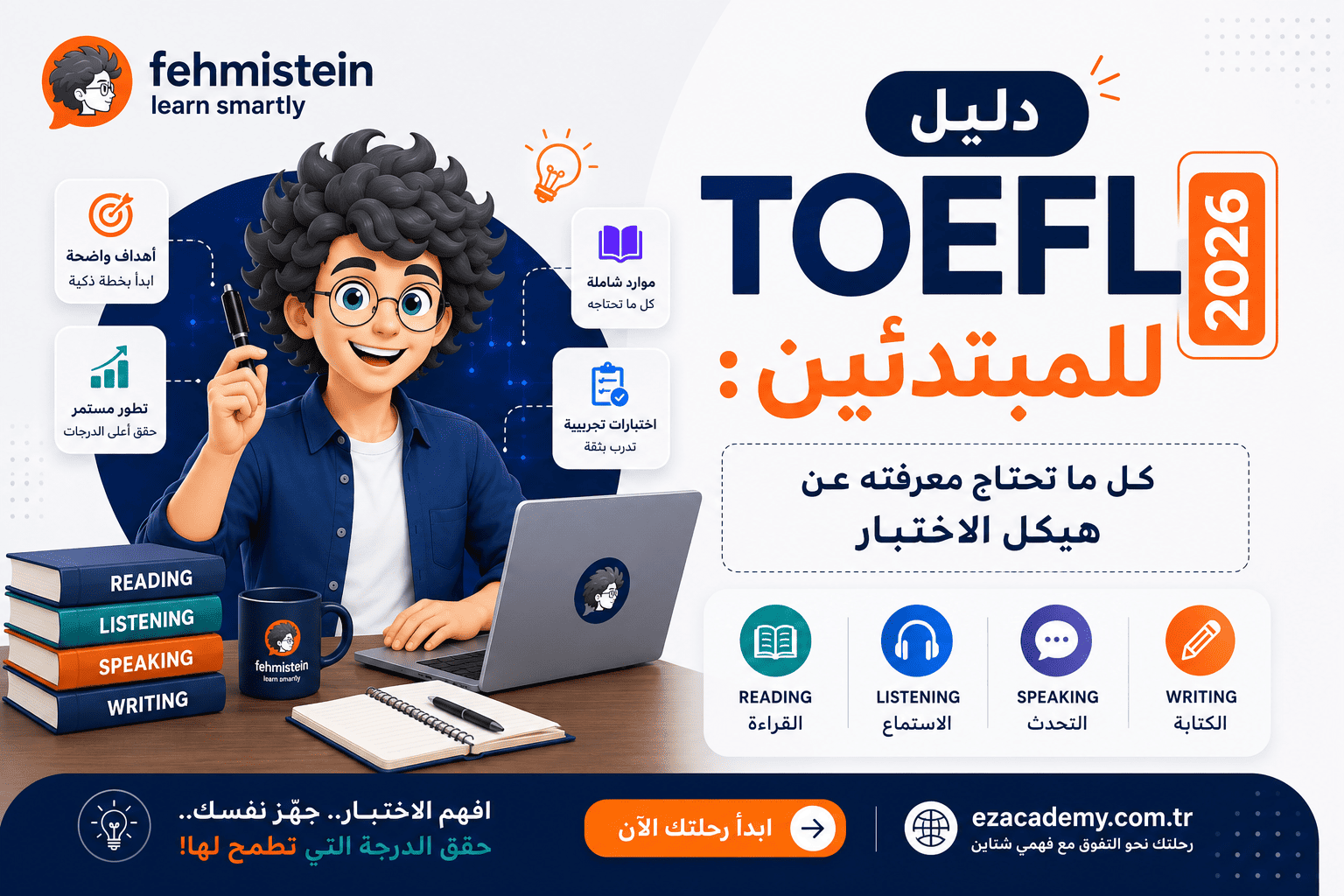
The TOEFL is a standardized test that evaluates four essential English skills: reading, listening, speaking, and writing, using an academic format that reflects real university environments. It is commonly required for university admissions, as well as for immigration programs, scholarships, and job opportunities that require certified proof of English proficiency.
TOEFL 2026 Structure: Sections and Timing
With recent updates in 2026, the TOEFL has become more streamlined, with a total duration of about two hours. Here is the breakdown:
- Reading: 35 minutes for 20 questions assessing your understanding of academic texts.
- Listening: 36 minutes for 28 questions based on lectures and academic conversations.
- Speaking: 16 minutes with 4 tasks evaluating your ability to express ideas clearly and fluently.
- Writing: 29 minutes focusing on academic discussions and the integrated essay task.
Essential Tips for Beginners
Before diving into advanced strategies, every beginner should start with these key steps:
- Set your target score: Know the score required by your desired university, as it determines your entire study plan.
- Understand the test format first: Do not jump into full practice tests without understanding question types and scoring methods.
- Build a strong language foundation: Strategies are effective only when supported by solid language skills.
- Practice time management early: Make time control part of your training from day one.
Common Beginner Mistakes
Many students lose valuable points due to avoidable errors:
- Constant mental translation: Translating from Arabic to English during the test wastes time and reduces fluency.
- Neglecting active listening: Simply hearing words is not enough—you must train on focused listening and smart note-taking.
- Practicing without time pressure: Training without a timer creates false confidence. The real exam requires speed.
- Unstructured writing: Writing without a clear structure (introduction, arguments, conclusion) lowers your score even if grammar is correct.
Why Choose Fehmistein for TOEFL Preparation?
At Fehmistein, we offer more than just lessons—we provide a smart, integrated system that elevates your preparation:
- Full flexibility: Study anytime, anywhere according to your schedule.
- Smart investment: Affordable monthly packages offering premium-quality courses.
- Strong foundation: Build your English skills from the ground up with exclusive materials.
- Exam insights: Learn recurring patterns and avoid common mistakes that cost points.
- Four-skill mastery: Intensive training in all sections through the Mock Tests Page, including professional time management techniques.
- Real exam simulation: Practice in a realistic test environment and receive detailed performance analysis.
Since time management is a key factor in your success, we recommend reading our specialized guide: "The 100+ Plan: TOEFL Time Management Strategies" after finishing this introduction. You can also explore detailed strategies for each section in "TOEFL iBT Exam 2026: Strategies for the Four Sections".
Frequently Asked Questions
- Is TOEFL harder than IELTS?
- There is no universally “harder” test. TOEFL is more academic and computer-based, while IELTS includes face-to-face speaking. The choice depends on your goals and preferences.
- How many times can I retake TOEFL?
- You can retake the test multiple times throughout the year, depending on available dates, allowing you to improve your score.
- Do beginners need a full course before registering?
- Not necessarily, but it is strongly recommended to take a placement test first to determine whether you need foundational preparation.
Start Your Journey Today
Do not leave your future to chance. Structured preparation is what separates an average score from an outstanding one that opens doors to top universities. Join thousands of students who chose smarter, more flexible preparation with Fehmistein.
Are You Ready to Improve with Confidence?
Join the TOEFL track on Fehmistein today, benefit from a free trial, and choose the package that fits your goals and budget.
Similar Articles