How Does AI-Powered Performance Analysis Help Improve Your TOEFL Score?
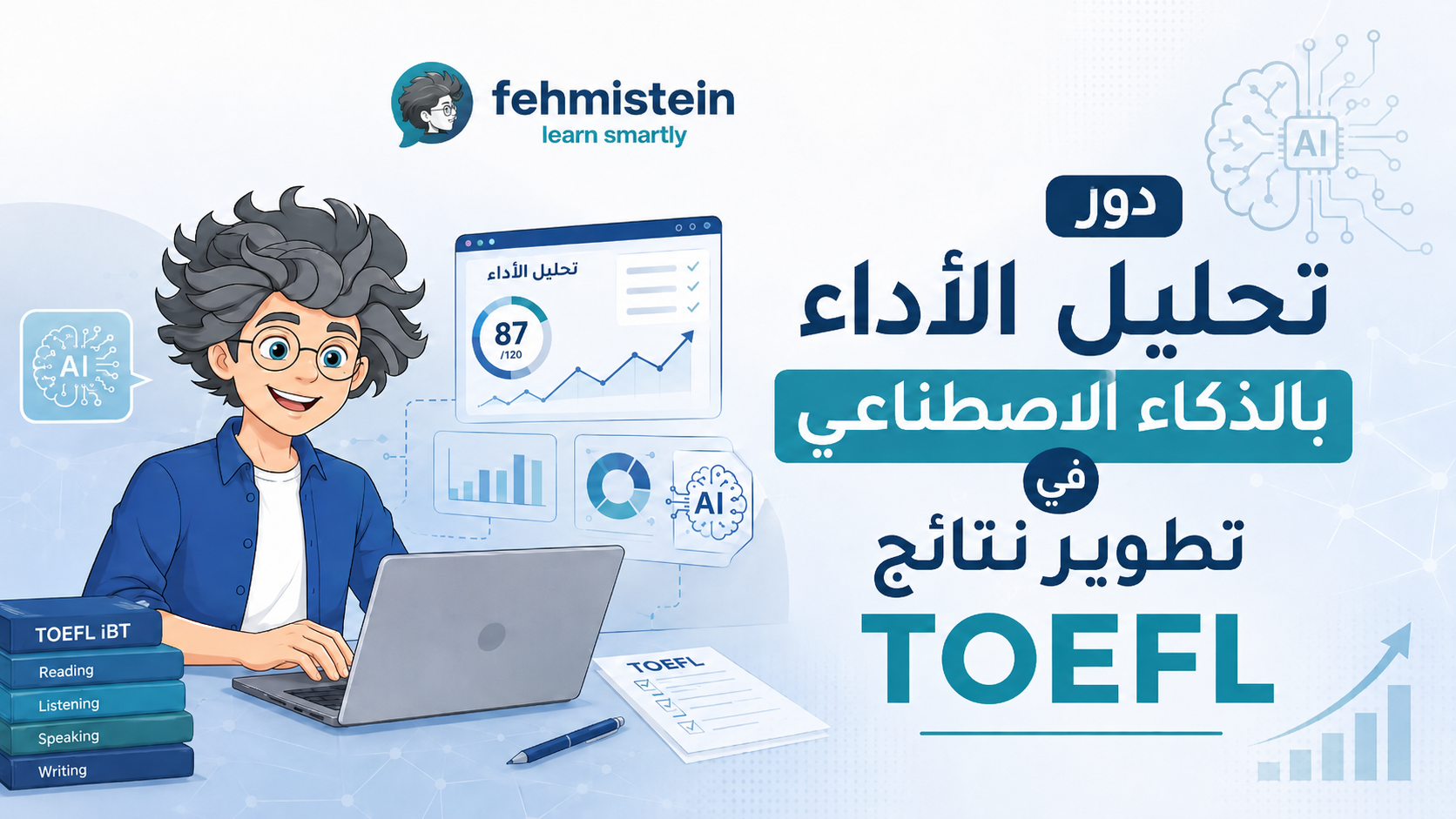
The Role of AI Performance Analysis in Improving TOEFL Results
Discover how artificial intelligence performance analysis can help improve your TOEFL score, identify strengths and weaknesses, analyze mistakes, and build a smart training plan through Fehmistein.
Many students prepare for the TOEFL by watching explanations, solving practice questions, and completing mock tests. However, the number of practice activities alone does not always explain why a score improves or remains unchanged.
A student may perform well in Reading but lose points in Listening because of weak note-taking. Another student may understand academic content but struggle to organize Speaking or Writing responses within the required time.
This is where AI-powered performance analysis becomes important in TOEFL preparation.
Smart training is not limited to showing the number of correct and incorrect answers. It helps students interpret their results more deeply by answering questions such as:
- Which skill should receive priority?
- Which mistakes keep recurring?
- Is the problem related to language or answer strategy?
- Does accuracy decline under time pressure?
- Is performance improving consistently?
- What should be practiced next?
When training data becomes clear and useful information, students can build a TOEFL study plan based on their actual needs instead of moving randomly between skills and practice tests.
What Is the TOEFL?
The TOEFL iBT measures a student’s ability to use English in academic situations through four main skills:
- Reading
- Listening
- Speaking
- Writing
The test tasks reflect the use of English in academic study and university communication, including understanding academic content and expressing ideas clearly and in an organized way.
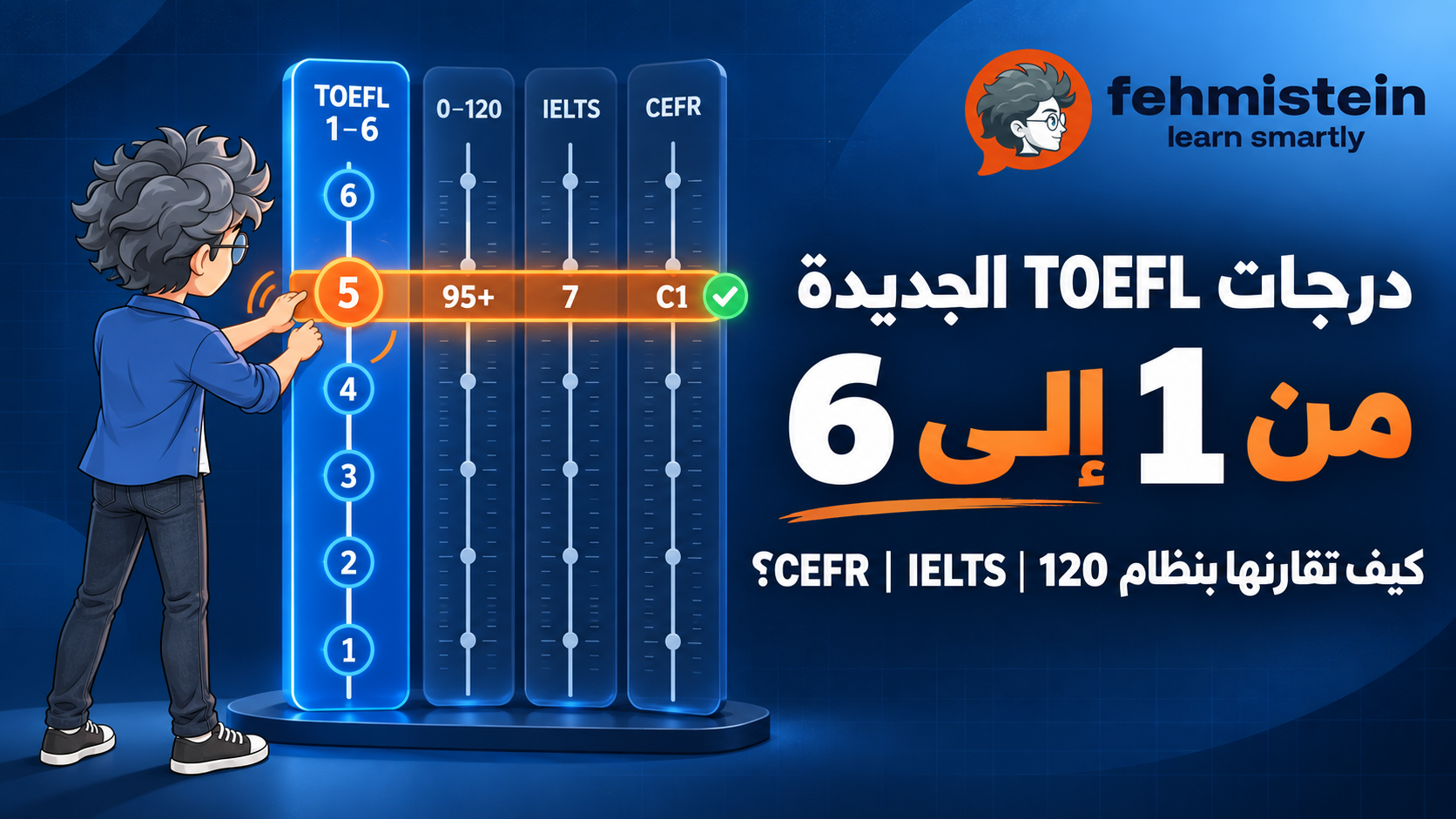
Since January 21, 2026, TOEFL iBT score reports have displayed scores for the four skills and the overall result on a scale from 1 to 6 in half-point increments, with clearer alignment to CEFR levels. During a two-year transition period, reports also show a comparable overall score on the previous 0–120 scale. (ETS)
This change makes TOEFL results more closely connected to language-proficiency levels. However, it does not eliminate the need to analyze the performance of each skill separately.
What Does TOEFL Performance Analysis Mean?
Performance analysis is the study of a student’s results beyond the final score.
Instead of simply saying, “I scored below my target,” analysis seeks to answer more specific questions:
- Which skill showed the weakest performance?
- Which question types caused the most mistakes?
- What was the average response time?
- Is the problem consistent, or did it appear only in one test?
- Are the mistakes related to language or organization?
- Can the student complete the task without a time limit but struggle under pressure?
- Are the results improving from one attempt to another?
The analysis may rely on data such as:
- Correct and incorrect answers.
- Response time.
- Task type.
- Difficulty level.
- Number of attempts.
- Recurring mistakes.
- Score in each skill.
- Performance development over time.
The Role of AI in Performance Analysis
Artificial intelligence helps organize large amounts of training data and identify patterns that students may find difficult to notice by looking at one score.
AI can support smart TOEFL training by:
- Classifying mistakes.
- Comparing previous results.
- Identifying weaker skills.
- Tracking time and accuracy.
- Displaying progress indicators.
- Organizing practice according to level.
- Providing faster feedback.
- Suggesting review priorities.
Official ETS preparation tools provide examples of this approach by offering practice activities, results, personalized feedback, Reading and Listening answer reviews, and feedback on Speaking and Writing tasks. (ETS)
However, artificial intelligence does not guarantee a specific score and cannot replace language development, practice, or expert review. Its main role is to help students make more accurate training decisions.
How Does Performance Analysis Improve TOEFL Results?
1. Identifying the Skill Lowering Your Score
The TOEFL score consists of four skills, and there may be a clear difference between them.
For example:
- Reading: Strong.
- Listening: Intermediate.
- Speaking: Needs improvement.
- Writing: Good.
In this case, distributing study time equally across all skills may not be the most efficient approach. The student should give Speaking greater priority while maintaining the other skills.
Under the current scoring system, students receive a score for each section in addition to an overall score calculated from the average of the section scores, rounded to the nearest half point. (ETS)
2. Discovering Recurring Error Patterns
Questions that a student answers incorrectly may look different, but they may result from the same underlying cause.
In Reading, recurring mistakes may result from:
- Failing to understand the main idea.
- Weak inference skills.
- Choosing an unsuitable meaning from context.
- Confusing the main idea with supporting evidence.
- Ignoring the relationship between sentences.
- Reading too slowly.
In Listening, recurring mistakes may result from:
- Trying to write down everything.
- Losing the main idea while taking notes.
- Failing to distinguish important details from secondary information.
- Difficulty following transitions.
- Focusing on one word and missing the rest of the passage.
When the system classifies these errors, it becomes possible to create practice sets that address the same pattern instead of completing new tests randomly.
3. Distinguishing Language Weakness from Strategy Weakness
The problem may be related to the student’s language level, or it may be related to the way the student approaches the test.
Signs of a language weakness include:
- Difficulty understanding most of a passage.
- Limited academic vocabulary.
- Inability to follow recordings.
- Basic and repeated sentence errors.
- Difficulty expressing an idea.
- Constant dependence on translation.
Signs of a strategy weakness include:
- Understanding the content but running out of time.
- Choosing the wrong answer despite understanding the concept.
- Poorly organized Speaking responses.
- Ignoring part of the Writing task.
- Taking too many unhelpful notes.
- Hesitating between two answers because of weak question analysis.
If the problem is linguistic, the student needs foundation training or general language development. If it is related to timing or task structure, specialized test preparation may be more appropriate.
4. Measuring Time Alongside Accuracy
A student may perform well during untimed practice but perform worse on a mock test. This means that the skill exists to some extent, but execution speed needs improvement.
Time analysis can show:
- Which tasks take too long.
- Which questions the student answers quickly but incorrectly.
- The difference between the beginning and end of a section.
- The effect of fatigue on accuracy.
- The time used for planning.
- The time remaining for review.
The goal is not to increase speed at the expense of understanding. It is to create a balance between:
- Comprehension.
- Accuracy.
- Organization.
- Time.
5. Building a Personalized Training Plan
Not all students need the same number of study hours or the same sequence of activities.
One student’s plan may begin with academic Listening, followed by note-taking, Speaking practice, and then mock tests.
Another student’s plan may begin with vocabulary review, followed by Reading improvement, Writing organization, and integrated-skills practice.
Performance analysis can be used to distribute study time. For example:
- 35% for the weakest skill.
- 25% for the second-weakest skill.
- 20% for mixed practice.
- 10% for error review.
- 10% for short tests.
These percentages are not fixed rules. They change according to the student’s performance and test date.
6. Monitoring Progress Realistically
One test result is not enough to judge progress. Some tasks may be easier, or the student may simply be more focused on a particular day.
You should compare several indicators:
- Average accuracy.
- Development in each skill.
- Reduction in recurring mistakes.
- Time spent.
- Stability of results.
- Quality of Speaking and Writing responses.
- Performance on full-length tests.
Official TOEFL resources allow students to track results and receive performance-related feedback. Some practice activities also provide CEFR estimates and section scores. (ETS)
7. Updating the Plan as the Student Improves
A personalized plan is not fixed.
A student may begin with a clear weakness in Reading and then improve after several weeks. In this case, the time allocated to Reading should be reduced and transferred to another skill.
The plan can be updated according to:
- The latest results.
- Skills that have become stable.
- Mistakes that continue to recur.
- The time remaining.
- How close the test date is.
- The score required by the university.
This is what makes smart training more flexible than a standardized plan that continues unchanged.
Performance Analysis in the Four TOEFL Sections
1. Reading Performance Analysis
Reading measures the student’s ability to understand texts and identify important ideas, relationships, and information.
You can analyze:
- Understanding the main idea.
- Identifying details.
- Making inferences.
- Understanding words in context.
- Understanding relationships between sentences.
- Identifying the function of a paragraph.
- Reading speed.
- Answer accuracy.
Example
A student may achieve an intermediate result, but the data may show:
- Good accuracy on detail questions.
- Weak inference performance.
- Excessive time spent reading the passage.
- More mistakes toward the end of the section.
These results can be transformed into a plan that includes:
- Inference-question practice.
- Reading short texts under time limits.
- Identifying evidence in the text.
- Reviewing mistakes.
- Completing a new section to measure improvement.
2. Listening Performance Analysis
Listening requires students to understand academic content, distinguish between ideas, and follow how a lecture or conversation is organized.
You can analyze:
- Understanding the general idea.
- Identifying details.
- Understanding the speaker’s attitude.
- Understanding relationships between ideas.
- Note-taking.
- Loss of concentration.
- Understanding tone or purpose.
- Performance across different recordings.
Common mistakes include:
- Taking excessively long notes.
- Failing to use symbols and abbreviations.
- Focusing on unimportant details.
- Failing to follow when the speaker moves to a new idea.
- Trying to remember everything.
- Not reviewing why an answer was selected.
How can smart training address these problems?
It can help by:
- Identifying the weakest types of recordings.
- Comparing accuracy with the amount of note-taking.
- Training the student to summarize ideas.
- Measuring the ability to retain details.
- Repeating practice focused on a specific skill.
3. Speaking Performance Analysis
Speaking measures the student’s ability to express ideas clearly in academic and university-related situations. Its tasks use structured prompts to assess understanding of spoken English and the ability to present ideas clearly. (ETS)
You can analyze:
- Clarity of the main idea.
- Response organization.
- Fluency.
- Number of pauses.
- Vocabulary range.
- Grammar mistakes.
- Pronunciation.
- Time management.
- Use of the required information.
An effective training cycle
- Record the response.
- Review its content and organization.
- Identify only two main problems.
- Plan the response again.
- Record a new attempt.
- Compare both attempts.
- Apply the feedback to another question.
AI-supported tools can provide fast initial feedback and analyze certain aspects of performance. However, in-depth evaluation also benefits from human academic review, especially for organization, accuracy, and clarity.
4. Writing Performance Analysis
Writing depends not only on grammatical accuracy. It also requires understanding the task, organizing ideas, and using information appropriately.
You can analyze:
- Understanding the task.
- Clarity of the main idea.
- Paragraph organization.
- Sentence cohesion.
- Vocabulary accuracy.
- Variety of structures.
- Grammar mistakes.
- Time management.
- Use of the provided evidence or information.
ETS indicates that Writing tasks assess cognitive processes such as planning, monitoring, and gathering information. These skills go beyond simply knowing grammar rules. (ETS)
Example of a Writing Error Log
- Incomplete idea → Possible cause: weak planning → Action: create an outline before answering.
- Repeated vocabulary → Possible cause: limited active vocabulary → Action: build a list of contextual alternatives.
- Weak cohesion → Possible cause: inappropriate linking words → Action: practice paragraph organization.
- Recurring grammar mistakes → Possible cause: an unstable grammar rule → Action: review the rule and rewrite the response.
- Failure to complete the task → Possible cause: poor time distribution → Action: gradually introduce timed practice.
How to Create a TOEFL Error-Analysis Log
You can record each training session using four simple points:
- Date and skill.
- Task type.
- Mistake and possible cause.
- Suggested next training activity.
Example
- July 10 – Reading, inference: The student chose an answer without evidence because of a superficial understanding of the text → Next activity: identify evidence for every answer.
- July 12 – Listening, lecture: The student lost the second main idea because the notes were too long → Next activity: practice abbreviations.
- July 14 – Speaking, organized response: Frequent pauses caused by weak planning → Next activity: use a brief idea outline.
- July 16 – Writing, organization: The paragraph lacked cohesion because it had no clear topic sentence → Next activity: rebuild the paragraph.
After one week, review:
- The most frequent mistake.
- The skill showing the least improvement.
- Mistakes that have disappeared.
- Tasks that need to be repeated.
- The new priority.
The Role of Mock Tests in Improving TOEFL Results
A mock test is an important tool, but it does not improve your score by itself.
TOEFL Practice Online provides an official testing experience using real questions from previous tests, along with results and feedback on the four skills within 24 hours. (ETS)
Mock tests are best used at three stages:
- At the beginning: To identify your level and the gap between your current score and target.
- In the middle: To measure the effectiveness of your training.
- Before the official test: To simulate real pressure, timing, and test conditions.
After each mock test, follow this sequence:
Test result → Skill analysis → Error classification → Focused practice → New measurement
Taking a new test immediately without reviewing the previous one may cause you to repeat the same mistakes.
An Eight-Week Smart TOEFL Training Plan
Week 1 — Diagnosis
- Complete a diagnostic test.
- Set your target score.
- Analyze all four skills.
- Create an error log.
- Identify priorities.
Weeks 2–3 — Foundation Treatment
- Review language gaps.
- Develop academic vocabulary.
- Practice the weakest skill.
- Complete short exercises without full pressure.
- Review the results.
Weeks 4–5 — Guided Practice
- Practice according to task type.
- Introduce timed practice gradually.
- Analyze mistakes after every session.
- Repeat similar questions and tasks.
- Record Speaking responses and complete Writing tasks.
Week 6 — Skills Integration
- Complete full sections.
- Apply test strategies.
- Adjust time management.
- Compare results with the initial assessment.
Week 7 — Simulation
- Complete a full mock test.
- Analyze the result.
- Identify the remaining gaps.
- Update the review plan.
Week 8 — Consolidation
- Review the error log.
- Repeat selected previous tasks.
- Complete light, focused practice.
- Consolidate timing and strategies.
- Prepare for test day.
This is a general model and should be adjusted according to the student’s level, target score, and test date.
When Do You Need Foundation Training?
You may need an English course or foundation track if you:
- Do not understand basic texts.
- Struggle to follow recordings.
- Cannot produce clear responses.
- Translate most of what you read and hear.
- Have limited vocabulary.
- Make basic mistakes in most sentences.
- Are far below the required score.
If your level is close to the target and your main problems are timing, organization, or task types, direct test preparation may be more suitable.
If you are unsure which path you need, you can receive a free educational consultation through EZ Academy to identify the most appropriate option.
Mistakes That Reduce the Value of AI in TOEFL Preparation
- Relying only on the score: A score alone does not reveal the cause of a mistake.
- Requesting ready-made answers: Getting an answer without making a genuine attempt does not develop the skill.
- Failing to review feedback: Feedback is useless unless it is turned into new practice.
- Using too many tools without a path: Having multiple applications does not mean you have a plan.
- Ignoring official resources: You should use practice materials that reflect the actual test.
- Not practicing under time limits: Your level may appear strong only outside test conditions.
- Neglecting human review: Some aspects of Speaking and Writing require understanding context, idea quality, and organization—not only automated correction.
- Failing to update the plan: Priorities should change as performance changes.
Fehmistein’s Role in Smart TOEFL Training
Fehmistein is the smart training platform established by EZ Academy. It offers a specialized TOEFL preparation track, along with other tracks such as IELTS, YÖS, and SAT.
The platform helps students move from random practice to more organized training through:
- A clear training path.
- Practice linked to test skills.
- A variety of question types.
- Mock tests.
- Error review.
- Performance analysis.
- Identification of strengths and weaknesses.
- Progress and achievement tracking.
The value of smart training does not lie only in displaying a score. Its real value is helping students understand:
- What they should practice next.
- How to distribute their study time.
- Which mistakes require review.
If you are also preparing for IELTS alongside TOEFL, read our article: How to Improve Your IELTS Score Through Smart Training and Error Analysis.
EZ Academy’s Role in Guiding Students
EZ Academy is an educational services and international university admissions company with more than nine years of experience. It is also the organization that established Fehmistein.
EZ Academy provides free educational and guidance consultations to help students:
- Define their English-learning goal.
- Understand university requirements.
- Identify the required score.
- Determine whether they need a language course or direct test preparation.
- Choose TOEFL or the most appropriate exam for their pathway, including TOEFL, IELTS, YÖS, and SAT.
- Organize their language-learning and test-preparation steps.
- Choose suitable universities and majors, including fully funded scholarship opportunities.
- Apply for university admission abroad.
The roles of the two organizations complement each other:
- EZ Academy guides students through language learning and studying abroad.
- Fehmistein provides organized, intelligent TOEFL training based on the student’s level and goal.
Frequently Asked Questions
How does artificial intelligence help improve TOEFL results?
It analyzes training results, classifies mistakes, compares performance, identifies priority skills, and tracks accuracy and timing.
Does smart training guarantee a high TOEFL score?
No. It helps organize the plan and reduce randomness, but the result also depends on the student’s level, consistency, training quality, and performance on test day.
Can artificial intelligence evaluate TOEFL Speaking and Writing?
It can provide initial feedback and analyze certain aspects. However, human academic review remains important for understanding idea quality, organization, and clarity in greater depth.
How many mock tests do I need for TOEFL preparation?
There is no fixed number. A small number of tests followed by deep analysis is better than many tests without review.
How do I know that I am improving?
Monitor the development of each skill, the reduction in recurring mistakes, improved timing, and the stability of results across multiple practice sessions.
Is the new TOEFL scale from 1 to 6?
Yes. Since January 21, 2026, score reports have displayed section and overall scores on a 1–6 scale, with a comparable score on the 0–120 scale during the transition period. (ETS)
How long is a TOEFL score valid?
TOEFL scores remain valid for two years from the test date. (ETS)
Is there a free trial for the TOEFL track?
Yes. A free TOEFL-track trial is available on Fehmistein, allowing students to explore the content and training method before choosing a subscription.
Turn Your Training Data into a Clear TOEFL Improvement Plan
Improving your TOEFL result does not begin with solving the largest possible number of questions. It begins with understanding what your results reveal about your level and performance.
Start with a diagnostic test, identify your weakest skill, classify your mistakes, complete focused practice, and compare your results regularly.
For free educational and guidance consultation about learning English, choosing the right exam, or applying to universities abroad, contact the EZ Academy team, an educational services company with more than nine years of experience and the organization behind Fehmistein.
WhatsApp: +90 552 574 12 76
To prepare for the TOEFL, explore the benefits of smart training on Fehmistein, including the organized preparation track, practice activities, mock tests, error review, and performance analysis.
A free TOEFL-track trial is available so that you can explore the training content and platform before choosing the right subscription.
👉 Explore the training benefits and start your free trial here: https://www.ezacademy.tr/packages
Make every result a source of information, and turn every mistake into a specific training activity that brings you closer to the score you need.
Prepared by: The Educational Content Team
Consultancy Review: Ms. Inaya Zureik, Founder and Director of EZ Academy and Fehmistein
Last updated: July 2026
Similar Articles