Digital SAT 2026: Your Comprehensive Guide to the New Digital Format and How to Turn the Differences to Your Advantage
Discover Everything That Changed in the Digital SAT 2026: Key Differences from the Paper Test, Adaptive Question System, Desmos Calculator, and Smart Preparation Tips from Fehmistein to Achieve an Exceptional Score
Introduction: If You Are Preparing the Old Way, You Are Preparing for a Test That No Longer Exists
With the full transition to the Digital SAT, preparing for this exam now requires completely different strategies from those used for the paper version. Relying only on printed books, solving questions without timing, and slowly reading long passages—these methods are no longer effective for the Digital SAT 2026.
If you are planning to apply to international universities this year, it is essential to understand how this test has evolved into a faster and smarter experience—and how to use these changes to your advantage.
In this article from Fehmistein, we explore the key differences in detail and provide practical tips to help you approach the test with real confidence.
First: What Is the Digital SAT and What Makes It Different?
The Digital SAT is the official computer-based version administered by College Board through the Bluebook app on your laptop or tablet. However, it is not simply a digital version of the old paper test—it has been completely redesigned around adaptive testing.
This means the test adjusts to your level as you progress, providing a more accurate evaluation of your abilities compared to the fixed paper format.
Second: Key Differences Between the Paper SAT and Digital SAT 2026
1. Time: From 3 Hours to About 2 Hours
The old SAT lasted nearly three hours. The new Digital SAT takes about two hours, thanks to a more efficient structure focused on quality rather than quantity.
2. Questions: From Fixed to Adaptive
The most important change is the adaptive system. Each section (Math and Reading & Writing) is divided into two modules. The difficulty of the second module depends on your performance in the first.
What does this mean?
The first module is crucial—it determines your scoring potential. Losing focus here can limit your final score, even if you perform well later.
3. Passage Length: From Long Texts to Short Passages
In the paper version, long passages were followed by multiple questions. In the Digital SAT, each question is linked to a short, focused passage, requiring rapid comprehension skills.
4. Calculator: From Limited Use to Full Access
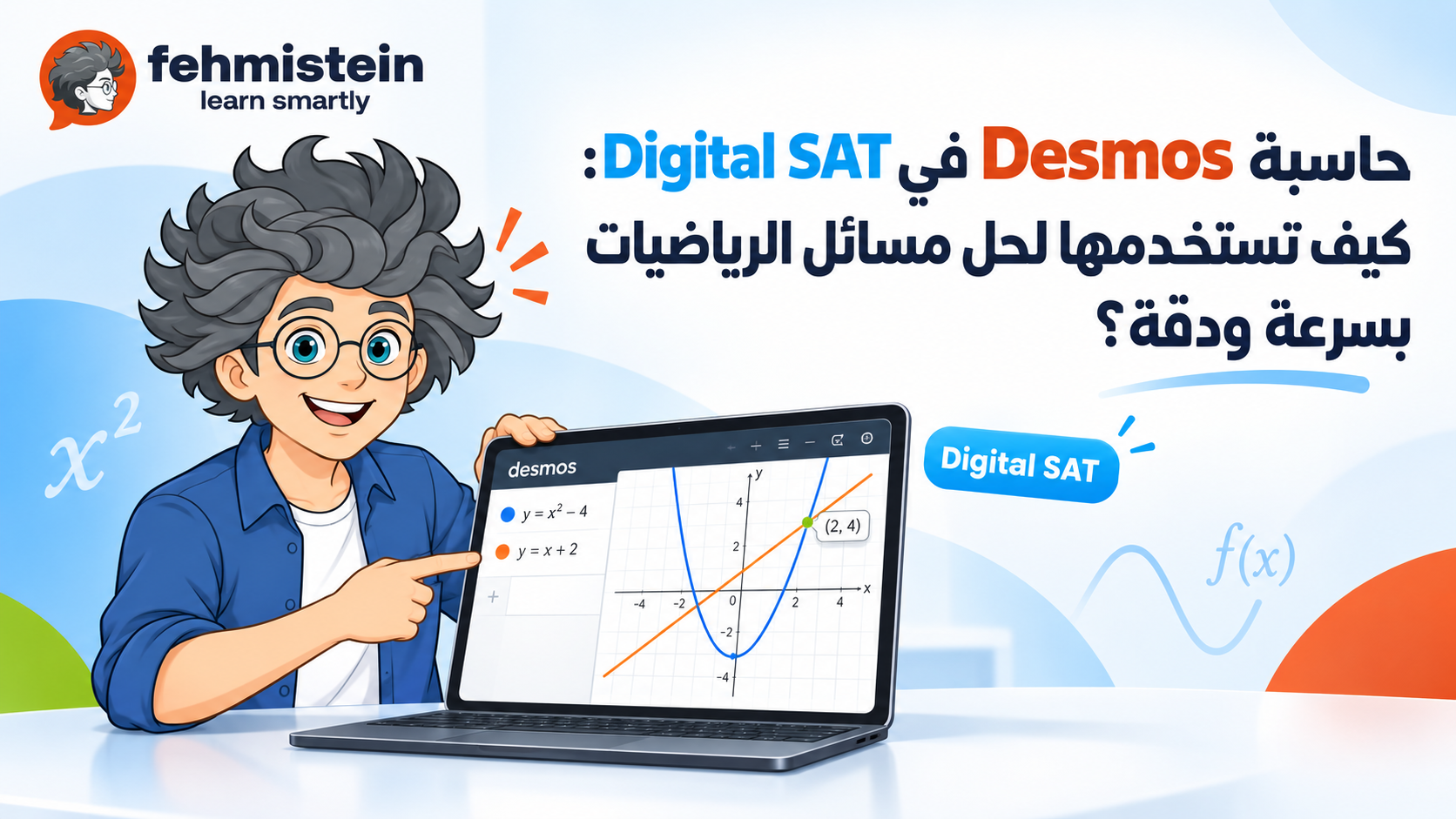
Previously, calculators were allowed in only part of the math section. Now, the Desmos calculator built into the Bluebook app is available throughout the entire math section. It is a powerful tool if used effectively—but a disadvantage if you are not trained on it.
5. Results: From Weeks to Days
Paper SAT results used to take weeks. Digital SAT scores are released within a few days, allowing faster planning for your next steps.
Third: The Most Important Feature — Adaptive Testing
The adaptive system allows high-performing students to access more challenging questions in the second module, which carry greater weight in the final score.
Key strategy:
Do not compromise your performance in the first module. Your focus and accuracy here directly impact your score ceiling.
Fourth: How to Prepare for the Digital SAT 2026
Since the test is fully digital, traditional preparation alone is not enough. Focus on these three core areas:
- Master the Desmos calculator: Efficient use can reduce time spent on complex problems by up to 50%.
- Train for rapid comprehension: You need to quickly extract meaning from short texts—not slowly analyze long passages.
- Simulate the Bluebook environment: Practicing in a realistic digital interface helps eliminate technical surprises on test day.
Fifth: Why Choose Fehmistein for Digital SAT Preparation?
At Fehmistein, we go beyond content delivery—we build a system tailored to the Digital SAT:
- Adaptive training tools: Practice through the Mock Tests Page using methods similar to the real adaptive system.
- Flexible pricing plans: Affordable options available on the Packages Page.
- Deep error analysis: Understand not just the correct answer, but why mistakes happen.
- Realistic Bluebook simulation: Learn how to navigate the interface and use digital tools effectively before test day.
If you are unsure whether your English level is sufficient, we recommend reading "Your Guide to CEFR Levels and SAT Readiness" or taking a free placement test.
Frequently Asked Questions About Digital SAT 2026
- Can I use my own device?
- Yes, you can use your personal laptop or tablet with the Bluebook app, or a device provided by the test center.
- Is the Digital SAT easier?
- Not necessarily—it is different. Success depends on how well you prepare for the digital format.
- What are the 2026 test dates?
- The SAT is offered multiple times a year, typically in August, September, October, November, and December. Early registration is recommended.
Start Your Journey Toward University Admission with Confidence
The Digital SAT is a real opportunity to achieve a higher score in less time—if you are properly prepared both technically and academically. Do not leave your success to chance. Join the Fehmistein community and secure your success in the Digital SAT 2026.
Similar Articles