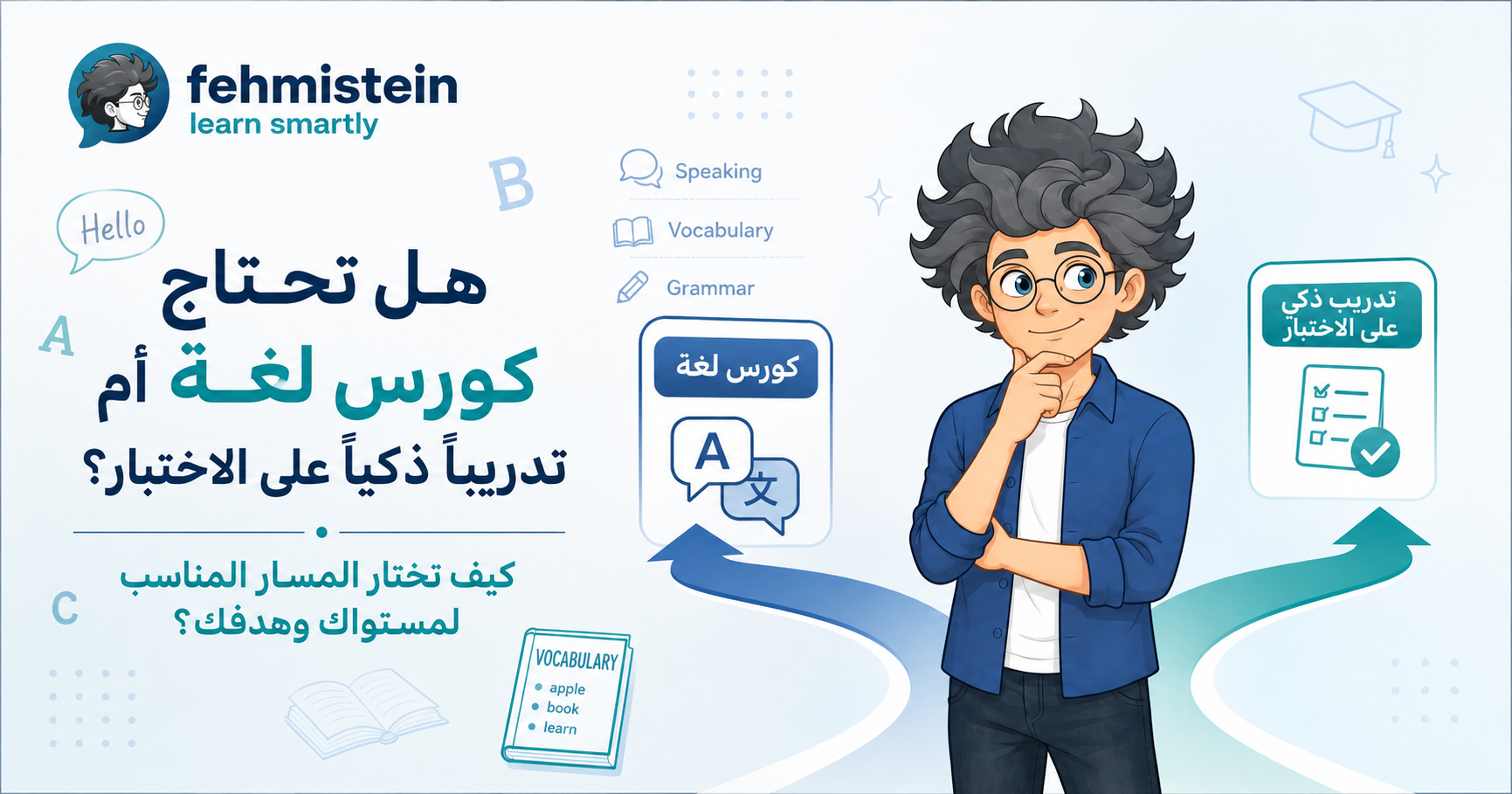
Can you learn English without a teacher? The complete guide to organized online self-learning
Introduction
Can you learn English without a teacher? This is a question that is increasingly asked by Arab students and learners in the digital learning era. With the spread of educational platforms and unprecedented availability of online resources, self-learning English has become a realistic and more accessible option than ever before.
But between success and failure in this journey stands one decisive factor: the learning method itself, not the number of resources or hours spent. In this comprehensive guide, you will discover the clear answer to this question, how to learn English online in an organized and effective way, and the best self-study methods to develop the language step by step until you reach a level that qualifies you for success in IELTS, TOEFL, and SAT exams.
First: Can you really learn English without a teacher?
The short answer is yes, absolutely. But there is one essential condition that cannot be compromised: learning must be based on a clear, organized plan rather than random and irregular attempts.
Learning without a teacher doesn't mean doing without guidance completely; it means following a clear self-training system that guides the learner step by step toward their goal. The crucial difference is between someone who opens random videos online versus someone who follows a logical learning path that starts with determining the level and ends with achieving the specific goal.
Millions of students worldwide have proven that organized self-study of English produces tangible and measurable results, and many have reached advanced levels without traditional teachers. To learn how to connect language learning to your specific exam goal, read:
Learn English Smartly: A Practical Guide to Success in IELTS, TOEFL, and SAT
Second: The essential difference between random and organized English learning
The difference between success and failure in learning English online is not about intelligence level or hours spent, but about the learning style at its core.
Random learning involves:
- Watching scattered videos from different sources without a plan or clear goal
- Using many apps simultaneously without depth in any
- Jumping from topic to topic without mastering prerequisites
- No regular assessment to track actual progress
The inevitable result is distraction, inconsistency, and constant feeling that time is wasted without real progress.
Organized learning is based on:
- Clear levels and precise goals for each stage
- Regular daily training that gradually increases in difficulty
- Weekly assessments to measure progress and identify weaknesses
- Building a strong, cumulative language foundation that's not easily forgotten
The result is faster improvement in level and greater confidence using the language in real situations. Organized learning is the true key to learning English smartly, not through random effort.
Third: Best practical methods for self-learning English online
To achieve real, tangible results while learning English without a teacher, proven methods make a clear difference:
- Determine your level accurately using CEFR European standards before any other step, as starting from the wrong point wastes precious time
- Break goals into short, measurable stages instead of vague goals like "I want to master English"
- Commit to short daily practice (30-60 minutes) consistently, as continuity matters more than session length
- Regular error review and weekly progress tracking to know where you truly stand
- Stick to limited, high-quality sources rather than jumping between dozens of scattered ones
These steps form the foundation of any successful self-study plan for learning English online, regardless of your current level.
Fourth: The four skills and importance of balance in self-study
Any effective plan for learning English without a teacher must include balanced development of the four skills, as international tests and real communication require all:
- Reading: To improve academic vocabulary and general text comprehension
- Listening: To develop auditory understanding and adapt to different speech speeds/accents
- Writing: To build academic/professional expression with clarity and precision
- Speaking: To gain fluency and confidence in real situations
Neglecting any skill creates clear language imbalance and weakens actual communication, especially visible in international tests assessing all skills. To know when your skill levels are sufficient for exam prep, read:
When do you know your level is ready to move from learning to IELTS/TOEFL training?
Fifth: Role of organized learning in rapid English improvement
Organized learning transforms scattered attempts into an effective training system producing measurable results. The core principle is simple: what gets measured improves; what doesn't, doesn't develop truly.
Organized learning helps with three integrated aspects:
- Precise, objective analysis of actual language weaknesses (vs guessing)
- Customized plan addressing weaknesses step by step
- Regular result measurement to track standing and progress
The difference between systematic vs random learners appears after weeks and becomes massive after months. This is successful English learning philosophy.
Sixth: CEFR international standards and importance in self-learning English
Most self-study English programs use the Common European Framework of Reference (CEFR) to define levels and guide learning paths. This provides objective language for proficiency assessment and skill requirements between levels.
The six CEFR levels progress from beginner A1/A2, intermediate B1/B2, to advanced C1/C2. Knowing your current level saves significant time and focuses efforts effectively. Most international exams (IELTS, TOEFL) link to these levels, making understanding essential. Read:
Difference between language knowledge and international exam readiness?
Seventh: Common self-learning English mistakes and avoidance
Many self-learners fall into repeated traps slowing/stopping progress:
- Relying solely on one app (Duolingo) thinking it's enough for academic mastery
- Vocabulary focus only, neglecting grammar/writing/speaking
- No real-context practice, sticking to theoretical exercises
- Quitting at first difficulty or commitment breaks
- Comparing to others vs focusing on personal path/level
Avoiding these from day one saves months of wasted effort, putting learning on right track immediately.
Eighth: Building successful self-study English plan step-by-step
Practical steps:
- Define precise final goal (IELTS? Professional communication? Study abroad?)
- Objectively test current level via reliable diagnostic identifying strengths/weaknesses
- Break goal into measurable monthly/weekly stages
- Fixed daily ≥30min practice as habit, not option
- Distribute time across four skills per needs/weaknesses
- Weekly progress review, adjust plan by results not feelings
Ninth: Self-learning English and international scholarship success
Organized self-mastery of English builds real academic readiness beyond tests, reflected in all study abroad aspects. Systematic learners follow lectures easily, write research accurately, communicate confidently—exactly what scholarship committees seek. Read:
How to build balanced university scholarship profile?
Common mistakes destroying scholarship chances
Self-learners prove independence/self-discipline international programs value.
Frequently asked questions about online self-learning English without teacher
Suitable for complete beginners?
Yes, if organized starting simple/gradual. Beginners need clearer/slower paths but equally effective results.
Time for noticeable improvement?
4-8 weeks daily routine commitment shows clear comprehension/pronunciation/confidence gains (real consistency required).
Need many diverse resources?
No—organization/quality > quantity. 2-3 high-quality regularly used > 20 randomly/inconsistently.
Daily life vs international tests difference?
Daily focuses fluency/natural communication; tests emphasize accuracy/time pressure/specific patterns. Complementary but different training. Read:
Why smart students lose high IELTS/TOEFL marks despite prep?
Enough for required IELTS/TOEFL score?
Yes if organized/understanding test nature/questions. Advanced stage needs regular real test model practice.
Conclusion: Self-learning English without teacher—possible & rewarding correctly
Self-learning English isn't just possible but potentially more effective than traditional when based on organization, clarity, consistency. Key isn't teacher presence/absence, but clear system from level assessment, balanced four-skill development, to specific goal achievement (international exam/study abroad/professional growth).
Start today with clear organized English plan suiting your level/goal/circumstances via specialized EZ Academy platform
Similar Articles