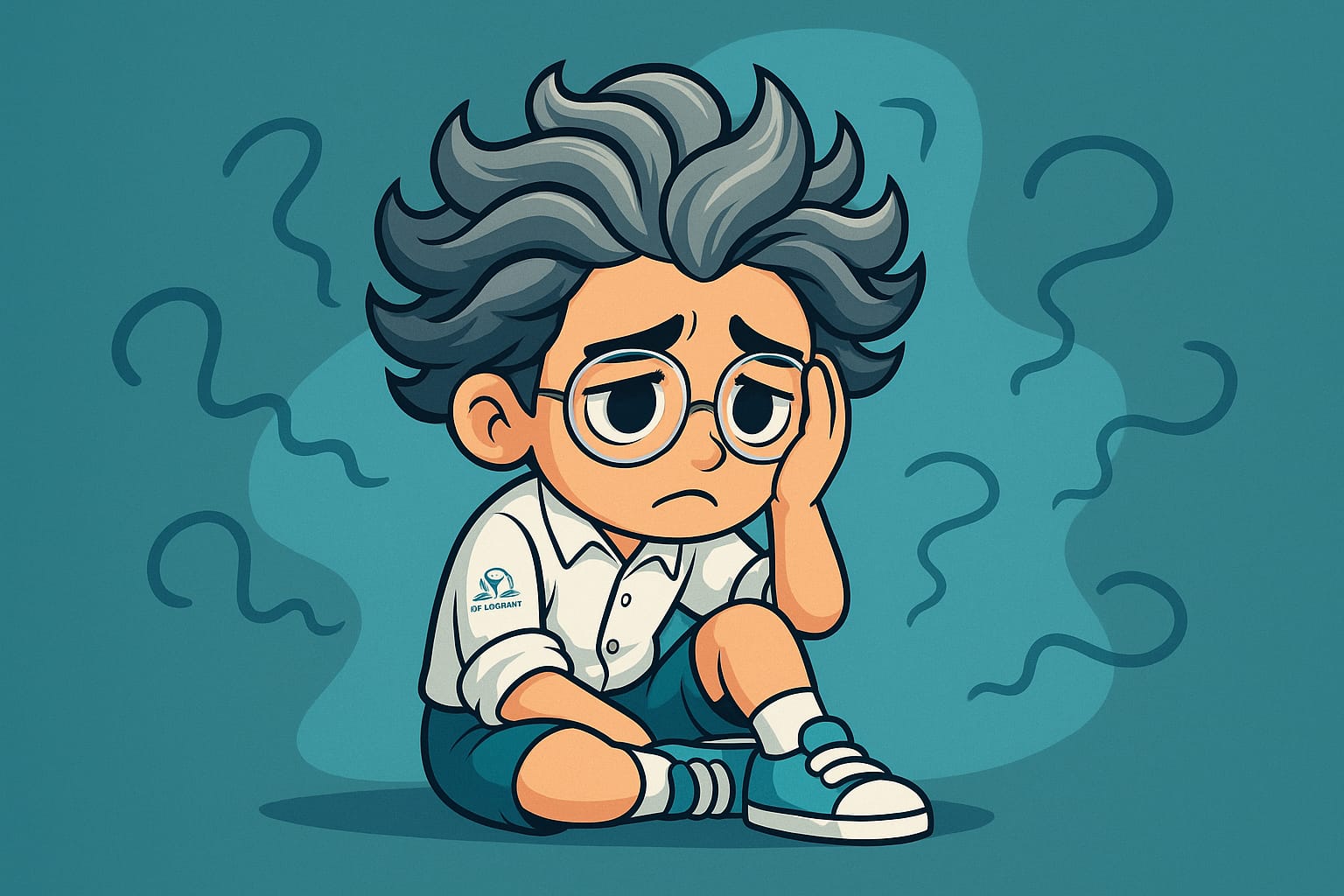
Why do we feel lost? Your complete guide to understanding yourself and restoring psychological balance
Do You Feel Lost and Without Direction? Discover the real reasons behind feeling lost in this article from Fahmy Stein (EZ Academy), along with practical steps to understand yourself and regain your psychological balance in the hardest moments.
Have you ever woken up in the morning feeling that everything in your life is moving forward, yet you still do not feel like you are in the right place? Do you find yourself going through your daily tasks automatically, without even knowing why you are doing them in the first place? If the answer is yes, then know that this feeling is more common than you imagine, and it absolutely does not mean that you are a failure or a weak person.
Feeling lost is one of the deepest human experiences, and in reality, it is a silent message sent by your subconscious mind saying: “Stop, reflect on yourself, and search for your true meaning.” That is exactly why we at Fahmy Stein (EZ Academy) decided to write this comprehensive guide to help you understand yourself and find your way again.
Being Lost Is Not Weakness, but a Real Turning Point
Many people often misunderstand the feeling of being lost and see it as a sign of failure or proof that they are less capable than others. But the truth is completely different. Moments of confusion and uncertainty are often among the most productive moments in a person’s life, because they force you to pause and reflect instead of rushing blindly toward goals you do not truly believe in.
A successful student, and a conscious person in general, does not run away from these moments; rather, they learn how to make use of them. Being lost is not the final stop — very often, it is the true beginning of a deeper journey toward the self.
The Real Reasons Behind Feeling Lost
To understand how to get out of a state of being lost, we must first understand its roots. These reasons may be interconnected and overlapping, but the most prominent ones are:
First: The Pressure of Social Expectations
We live in an era filled with expectations from every direction: from parents, friends, society, and even social media. When we try to please everyone at once, we gradually lose our own voice and forget what we actually want. This constant inner conflict between what others expect and what you truly feel is one of the most common causes of psychological disorientation.
Second: Fear of Making Life-Changing Decisions
Many people fall into the trap of complete paralysis when facing major and influential choices. The fear of making a mistake immobilizes them, so they remain stuck in place, neither moving forward nor backward. This stagnation itself is a kind of being lost, because staying where you are is a decision too — but it is one that takes away your control over the direction of your life.
Third: Constant Comparison with Others
When you make other people’s lives your only standard for success, you lose the ability to value your own path. Constant comparison feeds feelings of inadequacy and frustration instead of becoming a source of motivation. We discussed this topic in more depth in the article Do You Feel Like You Are Behind Others?, which explains how to embrace your own pace without comparing yourself to those around you.
Fourth: Academic and Study Burnout
Study burnout, also known as academic burnout, is a real phenomenon that affects students and professionals alike. When you exhaust yourself with work and study without enough rest and without a clear goal to pursue, enthusiasm turns into apathy, and energy turns into deep exhaustion. This burnout is one of the clearest signs of psychological disorientation among young people and students in particular.
Fifth: Lack of Purpose and Passion
When you do not know why you are doing what you do, every step becomes heavy and every achievement feels empty. A lack of purpose makes a person move without a compass, creating a constant feeling that something is missing, even when everything seems fine on the surface.
Practical Steps to Understand Yourself Again
Getting out of a state of being lost does not happen through one decision; it is a gradual process that requires patience and honesty with yourself. Here are practical steps that can help you begin:
Step One: Give Yourself a Real Moment of Silence
In the rush of daily life, we forget to stop and listen to ourselves. Set aside some quiet time in your day, away from screens and distractions, and allow your thoughts to rise to the surface. You do not need to find answers in that moment; it is enough to listen.
Step Two: Write Down What You Feel Honestly
Writing is one of the most powerful tools for self-understanding. When you put what is inside you onto paper, tangled thoughts begin to become clearer. Write down what worries you, what you wish for, what makes you happy, and what exhausts you. Do not judge yourself for what you write; the goal is honesty, not perfection.
Step Three: Review Your Path with a Critical but Compassionate Eye
Self-review does not mean punishing yourself for every mistake you have made. It means looking at your life objectively and asking: Does what I am doing now serve what I truly want? Are my priorities in the right place? Sometimes we do not need a radical change, but only a slight adjustment in direction. And if you are suffering from a feeling that you are not making progress despite your effort, then the article From Study to Success: How Do You Deal with a Feeling of Stagnation? may be a useful starting point for you.
Step Four: Rebuild Your Passion Step by Step
Do not expect passion to return all at once, because that rarely happens. Start with the small things that used to bring you joy, and give yourself permission to explore without pressure to produce results. Every experience, even if it is not perfect, teaches you something about yourself and brings you closer to your true identity. And if you want a guide on regaining motivation, see the article Did You Lose Your Passion for Studying? Here Is How to Regain Your Motivation.
Step Five: Surround Yourself with a Supportive Environment
Do not underestimate the impact of your surroundings on your mental state. Being in an encouraging environment, among people who listen to you without judgment, greatly reduces mental stress and gives you a safe space for expression. Choosing your educational and academic environment carefully has the same effect; the right environment improves your focus and productivity, as explained in the article Organizing the Study Environment: How Does Your Surroundings Affect Your Mental Focus?.
Critical Thinking and the Successful Student
One of the most important tools that can help you break out of the cycle of feeling lost is developing critical thinking skills. When you learn how to think deeply and analyze your situation objectively, you become less vulnerable to external expectations or impulsive decisions. A successful student is not the one who memorizes more, but the one who thinks better. This was discussed in detail and in an inspiring way in the article Critical Thinking: The Essential Skill Every Successful Student Needs.
How Fahmy Stein (EZ Academy) Helps You Overcome Moments of Being Lost
Fahmy Stein, also known as EZ Academy or ezacademy, is not just an academic platform in the traditional sense. It believes that real success is built not only on knowledge, but also on self-awareness, mental well-being, and the ability to understand oneself at every stage.
That is why the Fahmy Stein platform provides a collection of content and resources that address the student and the person at the same time. You will find specialized articles on psychological balance and self-development, alongside interactive tests that help you objectively assess your inner reality, and practical exercises designed to help you organize your priorities and define your goals clearly.
If you are a student preparing for international exams such as YÖS, IELTS, TOEFL, or SAT, you will find your guide to true academic excellence on the ezacademy platform through carefully designed educational content that combines academic performance with psychological balance, because study burnout and academic burnout begin when we forget the human being inside the student. You can browse all available articles through the EZ Academy Blog to find what suits your current stage.
Being Lost Is a Beginning, Not an End
Feeling lost does not mean that you are in the wrong place; more often than not, it means that you are standing at the threshold of a new and deeper stage in your life. It is okay to stop, it is okay to ask, and it is okay to reflect and review. What matters most is that you do not lose yourself along the way, and that you always remember that awareness of being lost is the first step toward clarity.
Be honest with yourself, step by step, day by day. And if you need support at any stage of your journey, Fahmy Stein (EZ Academy) is here to accompany you.
Similar Articles