Multiple Intelligences and Learning Styles: How to Discover Your Type of Intelligence and Use It to Achieve Academic Excellence?
In 1983, American psychologist Dr. Howard Gardner introduced one of the most influential educational theories in modern educational psychology history: the Theory of Multiple Intelligences. This theory radically changed how we view intelligence and learning by rejecting the idea that intelligence is a single unified entity measured solely by IQ score.
Theory Overview
Before Gardner's theory, IQ was the dominant sole measure for assessing human learning ability and excellence. High scorers were deemed intelligent, while low scorers were seen as less capable, marginalizing millions of talented students in areas traditional IQ tests ignored.
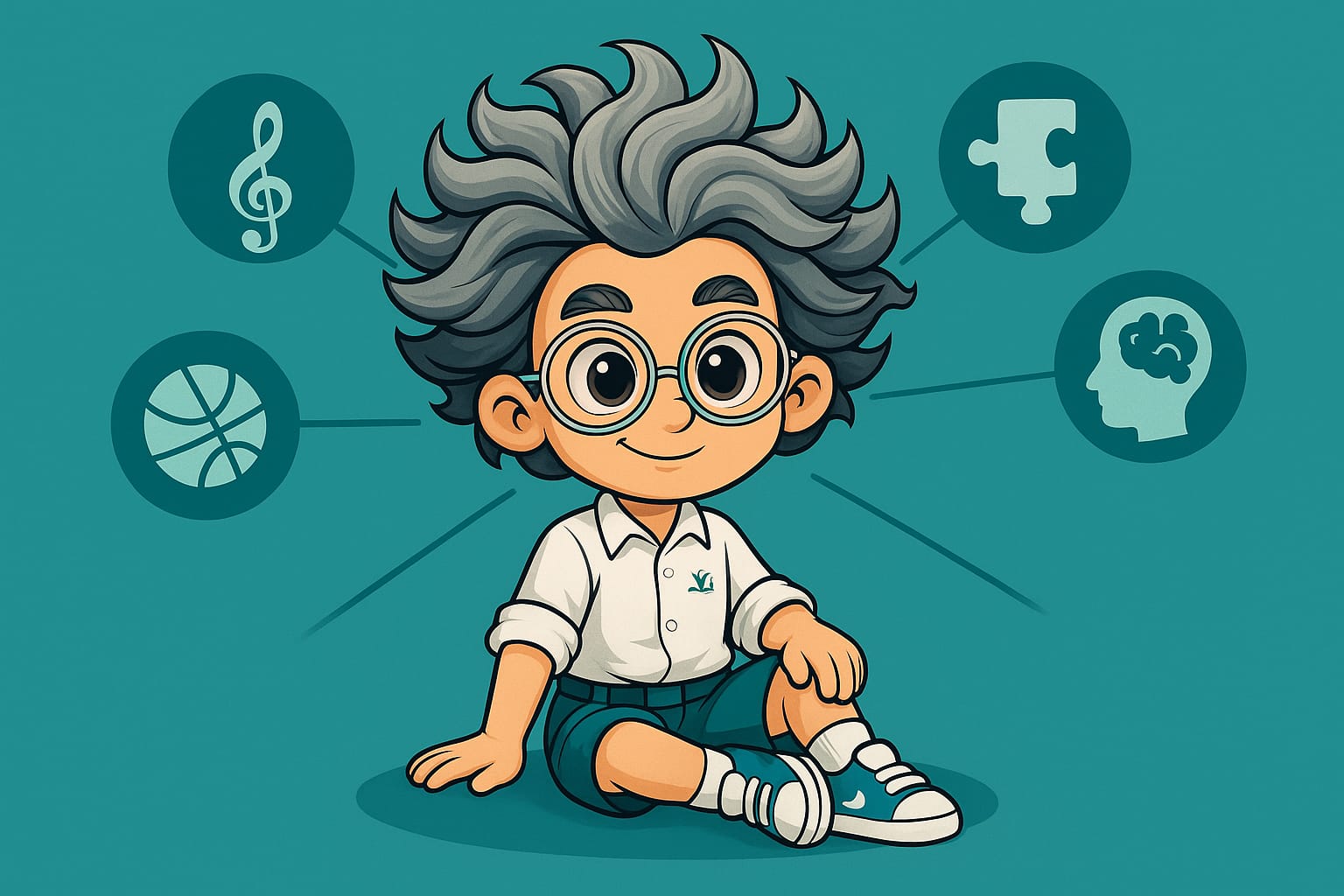
Gardner's theory corrects this oversimplification, asserting intelligence as a multi-dimensional phenomenon where each person has a unique mix of diverse intelligences shaping their thinking, learning, and creativity. Some students learn visually through images and diagrams, others best through movement and hands-on experience, and some via listening and music.
Understanding this diversity allows students to design study styles matching their true nature, rather than forcing adaptation to a one-size-fits-all approach. For insights on how understanding learning styles impacts international exam prep like IELTS, TOEFL, and SAT, see Learn English Intelligently: A Practical Guide to Success in IELTS, TOEFL, and SAT.
Eight Intelligences
1. Linguistic Intelligence
Those with linguistic intelligence have high sensitivity to language, expressing ideas easily and clearly in writing or speech. They excel in reading, writing, public speaking, and dialogue, using words as their natural tool for thinking and learning. These students benefit greatly from study methods relying on selective reading, summary writing, and verbal explanation.
2. Logical-Mathematical Intelligence
These individuals love numbers, patterns, and logic, excelling at solving complex problems through systematic, sequential thinking. They learn best by grasping cause-effect and logical connections between concepts. Critical thinking and data analysis thrill them most in learning. For how logical thinking aids international exams, read How to Handle Difficult Questions in International Exams Without Losing Time or Focus?.
3. Visual-Spatial Intelligence
People with visual-spatial intelligence learn through images, colors, and visual imagination. They enjoy drawing, mind maps, charts, and graphs. Visually presented information sticks in their minds faster and deeper than text or speech. They benefit from turning notes into colorful, organized mind maps.
4. Bodily-Kinesthetic Intelligence
These learners absorb knowledge through body movement and direct hands-on experience. They struggle sitting for hours with books without physical activity but grasp deeply when experimenting themselves. Practical activities and embodying concepts markedly improve their learning.
5. Musical Intelligence
Musical intelligence owners have exceptional sensitivity to tones, rhythm, and sounds. Studying with calm music boosts their focus, and they may turn information into rhythmic patterns for easier memorization. This intelligence enhances recalling sequences and patterns.
6. Interpersonal Intelligence
These individuals learn best through interaction, group discussion, and idea exchange. Group work and explaining to others embeds knowledge deeper than solo study. They naturally understand others' emotions and motivations, making them innate leaders in teams.
7. Intrapersonal Intelligence
Intrapersonal intelligence features deep self-awareness, clearly recognizing one's emotions, motivations, strengths, and weaknesses. They learn best via reflection, journaling, and personal experience analysis. This ties to lifelong self-directed learning, a top 21st-century skill.
8. Naturalistic Intelligence
These people excel at observing nature patterns, classifying organisms, and natural phenomena. They learn deeply in open environments through field experimentation. They shine in applied sciences, environmental studies, and fieldwork.
Discovering Your Style
Identifying your learning style is a practical investment transforming study methods and results. Three practical ways: Take free online multiple intelligences tests for an objective initial profile; observe study methods where you feel true comfort and effectiveness (e.g., reading, drawing, discussing, experimenting); seek feedback from teachers or smart educational platforms analyzing your study behavior.
Applying Knowledge Academically
Knowing your dominant intelligence enables smarter study and exam prep decisions: Linguistic types invest in reading/writing reviews and verbal self-explanation; visual types convert notes to colorful mind maps, preferring visuals; interpersonal types make group study routine with discussions; logical types focus on concept relations before details via applied problems. For building smart learning habits matching your style, read How to Become a Successful Language Learner? Proven Habits for Improving English.
Link to Exams and Scholarships
Multiple intelligences theory ties directly to big academic goals. Students understanding their style prep for IELTS, TOEFL, SAT more efficiently with less stress: Linguistic builds academic vocabulary via intensive reading; visual organizes writing via mind maps; interpersonal hones speaking through partners. For integrated study styles suiting your nature, read Learn English Online Intelligently: The Comprehensive Guide to Building a Strong Linguistic Foundation.
It also helps authentically present yourself in scholarship motivation letters, as self-aware students write more genuine, impactful essays. For building a balanced scholarship profile reflecting your true self, read How to Build a Balanced University Scholarship File to Increase Acceptance Chances?.
Common Mistakes
Students often misapply the theory: Believing in one single intelligence and rigid study (everyone has a mix varying in strength); using it to avoid hard subjects claiming mismatch (aim is smarter learning, not escape); applying rigidly without flexibility (best is blending styles for enriched, boredom-free experience).
FAQs
Does dominant intelligence change over time? Yes, intelligences aren't absolutely fixed; experiences, training, and environments evolve them.
Is the theory fully scientifically accepted? Widely embraced in education influencing global teaching, but faces academic critique on methodology—its practical value in guiding study persists.
What if I fit multiple styles? Normal; most have 2-3 prominent ones. Benefit comes from identifying which dominates in tough subjects or new learning.
Useful beyond high school? Absolutely, for university, work, or lifelong self-learning.
No single intelligence is superior; each has unique strengths. Success stems from awareness and leveraging it for personalized study. Start observing your learning today and design a custom approach. For a smart educational path matching your nature and goals, visit EZ Academy Platform.
Similar Articles