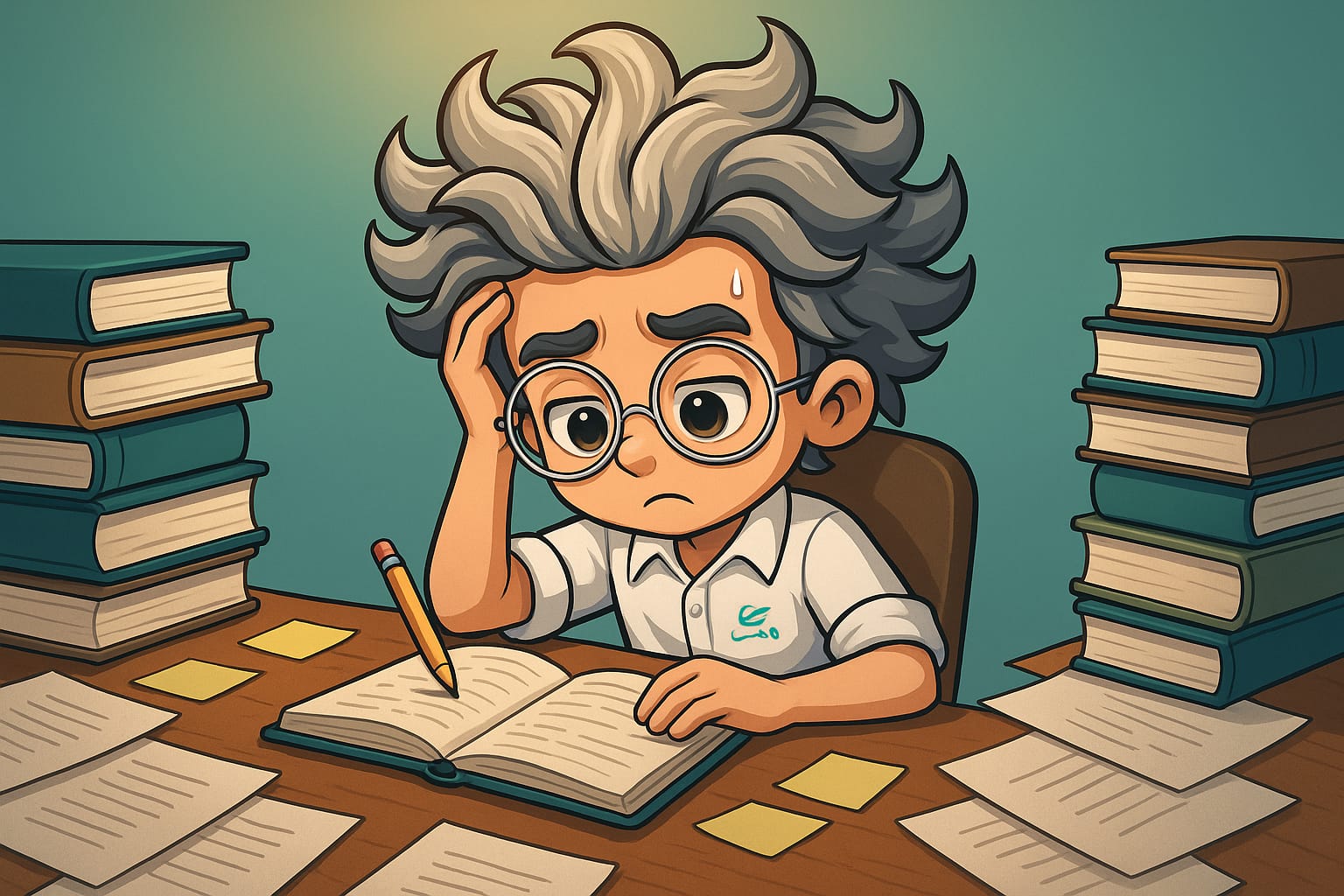
Your Mind Under Pressure: How to Manage Academic Stress Smartly Instead of Letting It Control You
Stress is a natural and unavoidable part of any student’s life, especially in high school, where exams and assignments multiply and the pressures of university admission and the future intensify. But the real difference between a student who overcomes these challenges successfully and another who collapses under them lies not in the amount of pressure they face, but in how they manage it.
Managing academic stress is not a skill some people have and others do not; it is a skill that can be learned and developed like any other academic skill. In this article, you will learn what academic stress is, why it happens, what symptoms you should pay attention to, and the most effective science-based strategies for turning psychological pressure from an obstacle into a real driver of achievement.
First: What Is Academic Stress and Why Does It Happen to Students?
Stress is the body’s natural response when it feels challenged beyond its current capacity or when important goals are threatened. For high school students, this response appears in many recurring situations throughout the school year:
- Approaching final exams or international tests such as IELTS, TOEFL, and SAT.
- Accumulation of homework and school projects within tight timeframes.
- Family or social pressure linked to others’ expectations of the student.
- Fear of failure or losing long-awaited academic opportunities.
A small amount of stress can motivate you to perform and temporarily boost your focus, which is known as positive stress. But when stress exceeds a certain level and becomes chronic, it begins to interfere with your thinking, reduce your ability to recall information, and weaken your performance during exams.
Second: Signs of Excessive Stress in High School Students to Watch For
Recognizing the early signs of excessive stress helps you intervene before it negatively affects your academic performance and mental health. The most common signs include:
- Persistent difficulty concentrating during study sessions, even when the environment is quiet and enough time is available.
- Sleep disturbances, whether chronic insomnia or excessive sleeping as a response to mental exhaustion.
- Quick anger, irritability, or a constant sense of unexplained anxiety.
- Physical symptoms such as frequent headaches, stomach pain, and muscle tension.
- A noticeable decline in academic performance despite effort and long hours of studying.
If you find yourself experiencing these symptoms, it does not mean you are weak; it means your body and mind are sending a clear signal that they need a different strategy for dealing with pressure. To understand the difference between normal tiredness and real academic burnout, read Why Do We Feel Exhausted Despite Studying Less? Signs of Academic Burnout and How to Treat It.
Third: Five Effective Scientific Strategies for Managing Academic Stress
1. Organize your time wisely and break tasks into manageable units
Feelings of overwhelm often come from seeing all the work ahead as one huge, impossible block. The solution is to divide that block into small, specific tasks spread across the week. When you complete a small task, your brain releases dopamine, which boosts motivation and gradually reduces stress.
To learn how to manage your time wisely under the pressure of international exams, read Time Is Not Your Enemy in International Exams: How to Manage Your Time Wisely in IELTS, TOEFL, and SAT.
2. Practice deep breathing and relaxation exercises
Just five minutes of intentional deep breathing can lower cortisol levels in the body and noticeably calm the nervous system. The most effective technique is square breathing: inhale for four seconds, hold for four seconds, exhale for four seconds, pause for four seconds, and repeat this three times. These few minutes can bring your brain back to a focused state quickly, especially during moments of sudden stress in an exam.
3. Set aside regular time for rest and enjoyable activities
Rest is not laziness; it is a necessary part of a healthy learning cycle. The brain needs regular breaks to process what it has learned and recharge for the next study session. Exercise, a favorite hobby, or even a short walk outdoors can clear the mind and reduce accumulated stress in a way that extra hours of studying cannot.
To learn how to build morning habits that prepare you mentally and emotionally for a productive school day, read How Do You Build Successful Morning Habits That Prepare You for a Productive School Day?.
4. Reframe negative thinking into a more balanced perspective
Our thoughts have a direct effect on the level of stress we feel. When you say to yourself, “I will definitely fail,” you are sending a danger signal to your body that triggers a full stress response. Instead, try reframing the thought by saying, “I will do my best, and I will learn from this experience no matter the result.” This simple shift in wording reduces psychological pressure and gives you more room to act with confidence.
5. Ask for help when stress goes beyond your ability to manage it alone
Do not hesitate to contact your teachers, school counselor, or a parent if you feel that stress has become too difficult to handle. Asking for help is not weakness; it is a smart and responsible decision. Students who seek support at the right time recover faster and return to normal performance more effectively than those who insist on handling everything alone until they reach the point of collapse.
Fourth: The Relationship Between Stress Management and Success in International Exams and Scholarships
Managing academic stress has a direct effect that goes beyond regular school exams and extends to international tests, university admissions, and scholarship applications.
A student who has effective tools for managing psychological pressure enters IELTS, TOEFL, and SAT exams with a calmer mindset and more stable performance, which directly reflects on results. To understand why some students lose high marks despite good preparation, read Why Do Smart Students Lose High Marks in IELTS and TOEFL Despite Long Preparation?.
In addition, the ability to manage pressure is one of the qualities admissions committees look for in international university applications, because it reflects personal maturity and the ability to endure demanding academic environments. To learn what admissions committees look for in student applications, read Why Are Students Who Meet the Requirements Rejected for International Scholarships?.
Fifth: When Does Academic Stress Become a Problem That Needs Professional Support?
Normal stress comes and goes and is linked to specific situations such as approaching exams or submitting an important project. But it becomes more concerning when it turns chronic and persistent regardless of the situation, when it begins to affect your social relationships, sleep, and appetite noticeably, or when you feel that you have lost your motivation for studying and for life in general.
In these cases, reaching out to a mental health professional is not a luxury but a necessity, just as you would go to a doctor if you broke your arm. Mental health is no less important than physical health in determining your academic performance and quality of life.
Frequently Asked Questions About Managing Academic Stress in High School Students
Is stress before exams normal or a sign of a problem?
Moderate stress before exams is completely normal, and in fact it is helpful because it motivates students to prepare. The problem begins when stress becomes paralyzing and prevents clear thinking and normal performance during the exam.
Does studying more reduce stress or increase it?
Excessive studying without enough rest increases stress rather than reducing it. Organized study combined with regular breaks is far more effective in lowering stress and improving performance.
How can I help myself sleep well during exam periods?
Avoid electronic devices for one hour before bed, practice light breathing exercises, and avoid intensive review in the last hours before sleep. Good sleep improves performance more than extra study hours when you are exhausted.
Is stress management a skill that can be learned, or is it innate?
It is a skill that can be learned and developed, just like any academic or life skill. And like any skill, it requires regular practice before it becomes a natural part of how you handle challenges.
Conclusion: Control Your Stress, Control Your Academic Path
Academic stress will not disappear completely from your life, but you can learn how to manage it wisely so that it becomes a force driving you toward achievement rather than an obstacle holding you back. A student who has effective tools for managing psychological pressure turns every challenge into an opportunity for growth and every pressure into fuel for progress.
Start today by applying one of the strategies you read in this article, and after a few weeks, you will notice how your relationship with pressure changes from fear to control. To build an organized academic path that helps you achieve your goals with confidence and discipline, visit EZ Academy’s specialized platform.
Similar Articles