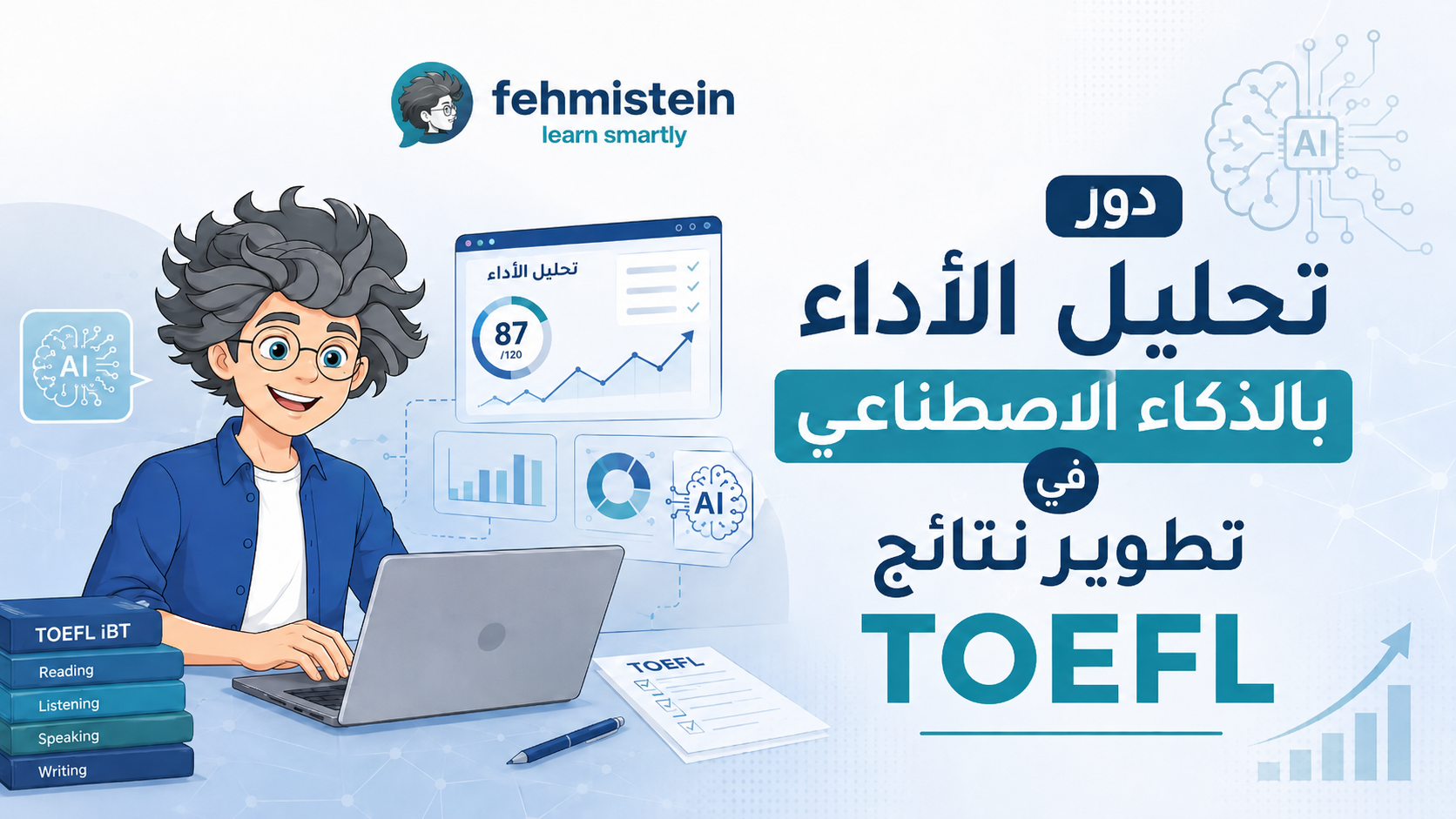
How to Study Smart, Not Hard | A Comprehensive Guide by Fahmi Stein to Improve Learning
Do you spend long hours studying but not getting the results you aspire to? Do you sometimes feel that your great effort does not reflect in your grades or your deep understanding of the material? In reality, the key to academic excellence lies not in the number of hours you study, but in how you study. Transforming from random studying to smart studying is what will make a real difference in your educational journey.
This comprehensive guide from the Fahmi Shtayn Platform presents you with the best effective study strategies to help you maximize the benefit from your time and effort. To start your smart study journey, discover how the EZ Academy platform can support you.
1. Create a Smart Study Plan
Advance planning is the cornerstone of any successful learning process. A smart plan does not mean stuffing your schedule with tasks, but distributing your time effectively and focusing on what truly matters. To build a well-crafted study plan, follow these tips:
- Apply the 80/20 rule: This rule states that 80% of results come from 20% of the effort. Identify the most important 20% of information that will help you understand 80% of the material, and focus on it first.
- Divide your time using the Pomodoro technique: This method involves breaking study sessions into short, focused periods (usually 25 minutes) followed by a short break (5 minutes). This maintains your focus and prevents fatigue.
- Use task organization tools: Apps like Notion and Trello can be your gateway to organizing study tasks and tracking progress, turning studying into a clear, systematic process.
2. Leverage the Power of Artificial Intelligence in Learning
Artificial intelligence is not just a buzzword; it is a powerful partner that can revolutionize your learning method. In an era where technology is accelerating, the smart student can use these tools to speed up learning and understanding. For more, check out our list of the top 10 AI tools that can help you in your studies. Among the most prominent tools:
- ChatGPT: Use it for quick, simplified explanations of complex concepts or to create summaries of difficult parts of the curriculum.
- QuillBot: An ideal tool for improving your academic writing and paraphrasing sentences to ensure clarity and originality.
- Wolfram Alpha: Your best ally for solving mathematical equations and complex scientific problems step by step.
- Anki: A great app for creating smart flashcards based on spaced repetition to enhance long-term retention.
3. Focus on Deep Understanding, Not Surface Memorization
The difference between a successful student and an excellent one often lies in their ability to understand rather than just memorize. Memorization may work for a short test, but understanding is what stays with you and helps in real-life situations and major exams. Try these techniques:
- Feynman Technique: This technique relies on explaining the concept you want to learn in the simplest words, as if you were explaining it to a child. If you struggle to simplify it, you haven't understood the idea well enough yet.
- Mind Maps: Instead of linear notes, use mind maps to visually organize information. Start with the main idea in the center and add branches for sub-concepts and details, helping you see the big picture and connections between ideas.
- Practical Application: Do not settle for reading solutions; solve exercises and problems yourself. Application is the true test of your understanding and an excellent way to discover knowledge gaps.
4. Boost Your Memory with Spaced Repetition
Spaced repetition is one of the most effective ways to transfer information from short-term to long-term memory. The idea is to review information at increasing time intervals. Instead of continuous studying for 6 hours, spread your reviews as follows:
- First review after one day of learning.
- Then after 3 days.
- Then after a week.
- Finally, after two weeks.
You can use apps like Anki and Quizlet, which apply this principle automatically, saving you the hassle of tracking the schedule yourself.
5. Embrace Active Learning and Avoid Passivity
Passive studying, like re-reading notes or highlighting text, gives a false sense of mastery. Active learning requires you to interact with the material and engage in real mental effort. Here's how to apply it:
- Ask questions: Instead of passively receiving information, analyze the text and ask critical questions: Why is this true? What if the opposite happened?
- Teach others: The best way to ensure you understand a topic is to explain it to someone else. This process reveals gaps in your understanding and deepens your knowledge.
- Solve problems yourself: Resist the urge to look at the solution immediately. Try solving it first, even if it takes longer.
6. Master Time Management and Avoid Procrastination
Procrastination is the number one enemy of smart studying. The good news is that it is an enemy you can overcome with simple behavioral strategies:
- Break down large tasks: Feeling overwhelmed by a huge project or difficult subject is a main cause of procrastination. Divide the big task into small, specific ones that are easy to start.
- Use the 5-minute rule: Tell yourself you will study for just 5 minutes. Often, those 5 minutes are enough to break the resistance barrier, and you will find yourself continuing longer.
- Use focus apps: Apps like Forest and RescueTime help you stay focused by blocking distracting apps or motivating you not to use your phone.
7. Take Care of Your Physical Health: Sleep and Exercise
The connection between body and mind is very strong. Neglecting your physical health will negatively affect your ability to focus and learn. Sleep is not just rest; it is an active process where the brain consolidates information and strengthens memory. Ensure:
- 7 to 9 hours of sleep daily to guarantee maximum alertness and focus during studying.
- Avoid phones or screens before bed by at least one hour, as the blue light they emit disrupts melatonin production responsible for sleep.
- Exercise regularly, as it improves blood flow to the brain, enhancing cognitive functions and memory.
How Does the Fahmi Shtayn Platform Support Your Smart Study Journey?
The Fahmi Shtayn platform on the EZ Academy website is not just an educational platform; it is an integrated ecosystem designed to help you apply everything you read in this guide. Whether preparing for SAT, YÖS, TOEFL, or IELTS exams, the platform provides smart tools for success.
- Smart performance analysis: The platform identifies your weaknesses and strengths precisely, guiding you to areas needing more focus.
- Smart practice for international exams: Benefit from mock tests simulating real SAT, YÖS, TOEFL, IELTS conditions. Discover how you can prepare smartly for the SAT through our comprehensive guide.
- Personalized study plans: Using AI, the platform creates a customized study plan suited to your pace and academic goals. If you plan to study in Turkey, this TR-YÖS guide is your ideal starting point.
Conclusion: Toward a Smarter Educational Future
Smart studying is a strategic decision, not an innate trait. It is a set of skills and techniques that any student can learn and apply. By following these strategies—from smart planning and AI use, to deep understanding and time management—you can significantly improve your academic results and reduce exam-related stress.
Similar Articles